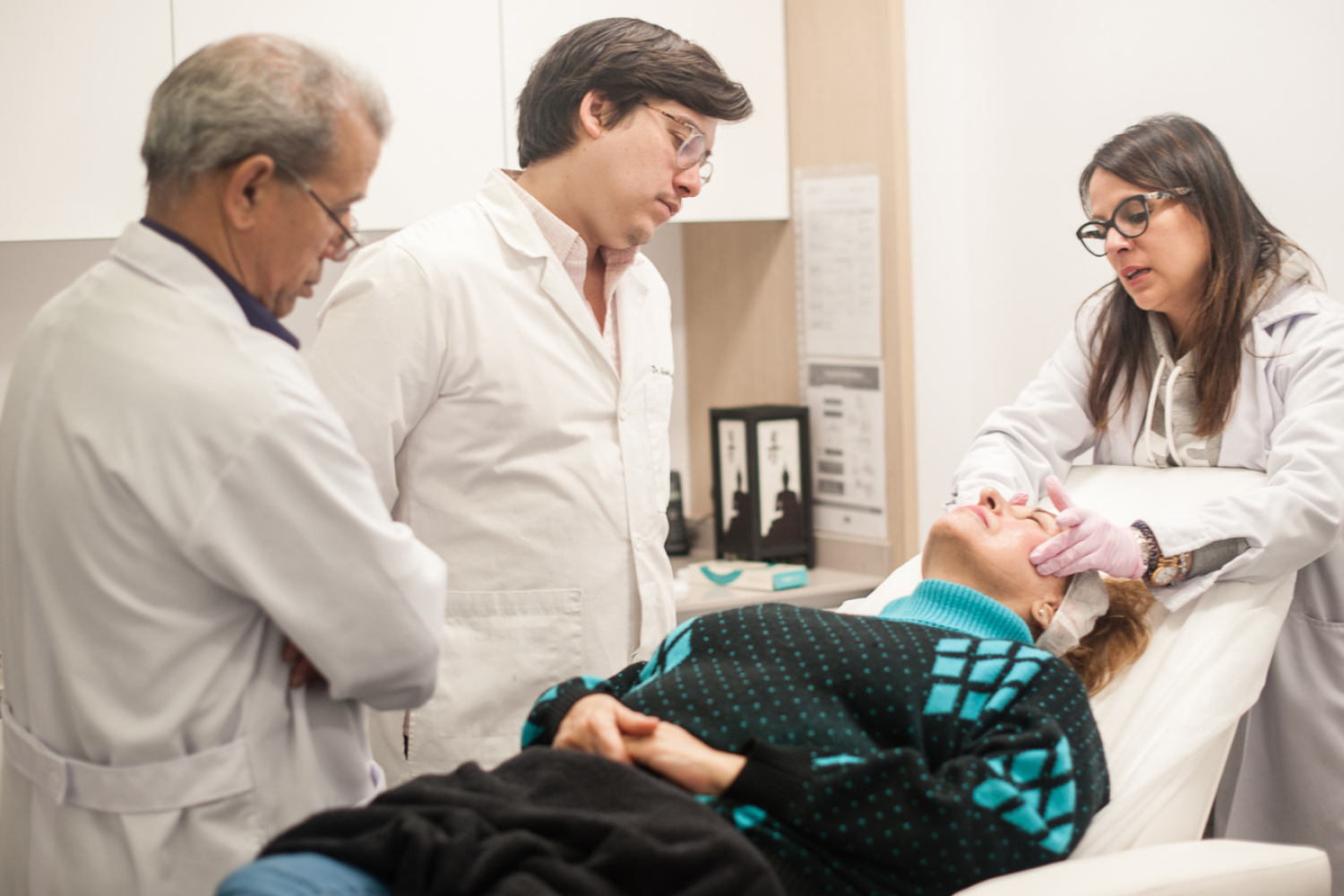
Management of Aesthetic Emergencies: The Achilles' Heel of Many Doctors
Applying aesthetic treatments successfully is not just a matter of technique. In medicine, being prepared to manage clinical emergencies is what truly separates a good professional from an excellent one.
According to Dr. Manuel Rubio, many doctors train in fillers, toxin, and biostimulators… but not in the most important part: handling complications and in-clinic emergencies.
What happens when a complication appears in the middle of a session?
What should be a safe and controlled environment can instantly turn into a critical situation if the practitioner lacks the necessary knowledge and resources. Some common mistakes include:
- Not recognizing warning signs in time
- Minimizing a complication due to lack of understanding
- Not having clear action protocols
- Not having a complete emergency kit
- Transmitting insecurity or panic to the patient
Worst of all: acting late, incorrectly, or out of fear can worsen the clinical situation and damage your professional reputation.
Most doctors are not trained in aesthetic emergencies (until they experience one)
At CIME Academy, we often receive students who have faced a real complication and come with one clear intention: “I never want to feel that way again in my practice.”
Traditional aesthetic training often prioritizes the visual aspect, while neglecting the medical, diagnostic, and emergency management components.
What should every aesthetic doctor know about clinical emergencies?
- How to recognize a vascular occlusion in its earliest stages
- What to do in cases of mild or moderate anaphylactic shock
- How to manage an acute post-injection infection
- The steps to take when facing imminent necrosis
- How to use hyaluronidase safely and effectively
- How to properly document an emergency
- How to remain calm and communicate with the patient during a crisis
At CIME Academy, we also train what no one else teaches: the clinical reaction
Our practical approach includes:
- Real clinical cases with emergency scenarios
- Simulation of real-time interventions
- Preparation of the environment: organizing emergency material
- Emotional training to act with control and confidence
- Role-play for communication with patients in crisis
We don’t just teach you how to inject—we train decisive and capable doctors.
What students say after the training:
“This training gave me more confidence than any congress. Knowing how to act in an emergency completely changed my security as an aesthetic doctor.”
— Dr. Luis C., CIME Practical Training Student
Do you want to be prepared for any aesthetic emergency and treat with confidence?
At CIME Academy, we train you in real management of clinical complications.
Location: Calle Entenza 144, 08929 Barcelona – Clínica CIME Barcelona
WhatsApp: +34 690 864 816
Email: secretaria@cimeacademy.com